Why Homeowners Across Pinellas County Keep Discovering They Need a Concrete Pool
It usually starts with a design conversation. A homeowner in St. Petersburg, FL sits down with a contractor, pulls up some inspiration photos, and starts describing the pool they have been picturing for years. In a coastal market like this one, where sandy soil and a shallow water table are facts of life for most residential lots, those early conversations tend to surface material questions faster than homeowners expect. The shape they want does not fit a standard vinyl liner. Or the freeform edge they had in mind cannot be achieved with a prefabricated fiberglass shell. Or they want a tanning ledge, a raised spa, and a beach entry, all in one cohesive build. That is the moment the design conversation shifts into a material conversation. And that is often how homeowners first start researching concrete pools in Pinellas County. The design they want simply requires it.
What surprises many people is that this is not a limitation. It is actually a clarifying moment. When the pool you are imagining cannot be built any other way, the material question answers itself. Concrete is the only pool construction method that gives you full control over shape, depth, finish, and integrated features. But getting there, understanding why concrete is the right call and what it takes to do it correctly in this part of Florida, is where a lot of homeowners run into confusion. They find conflicting information online, get quotes that vary wildly, and are not sure which concerns are real and which are just contractor sales tactics.
We have walked through this with a lot of families across Clearwater, Treasure Island, and the broader peninsula. The frustration is real and it is understandable. So let us break down what is actually going on, why it is so common here, and how to move forward without making the mistakes that cost people time and money.
What Causes the Confusion Around Pool Material Selection
Most homeowners do not start a pool project thinking about construction materials. They start thinking about how the finished pool will look and feel. The problem is that most general pool information online is written for a national audience, where soil conditions, climate, and local permitting norms vary enormously. What works in Arizona does not necessarily apply to a lot in the Old Northeast neighborhood of St. Petersburg, where lot sizes are tighter, mature landscaping complicates excavation, and the water table can sit closer to the surface than homeowners expect.
Vinyl liner pools are often marketed as the budget-friendly option, but they require a specific structural frame and cannot be built in the freeform shapes many Florida homeowners want. Fiberglass pools arrive as a pre-molded shell, which limits size and configuration significantly. Neither option gives you the creative range that custom pool design in this market often calls for. Concrete, by contrast, is formed on site. That means your pool can follow the exact footprint of your yard, accommodate grade changes, and integrate features like a spa or hot tub addition seamlessly into the overall structure.
Why Concrete Pools in Pinellas County Present Specific Challenges
Pinellas County sits on a peninsula surrounded by Tampa Bay and the Gulf of Mexico. The soil here is predominantly sandy with high moisture content, and the water table in many neighborhoods is notably shallow. That combination matters a great deal during pool excavation and construction. Concrete pools Pinellas County builders construct must account for hydrostatic pressure, which is the upward force that groundwater exerts against a pool shell. If this is not addressed correctly during the build, it can cause structural problems over time, including cracking or the pool shell shifting.
The humidity and salt air also affect the long-term performance of pool finishes. Plaster and pebble finishes used in concrete pools need to be specified with Florida’s coastal conditions in mind. This is not a reason to avoid concrete. It is a reason to work with someone who builds concrete pools Pinellas County homeowners can rely on for decades, not just a few seasons. Our team has written about these soil and climate factors in detail in our guide to spa and hot tub installation in St. Petersburg, and the same principles apply to full pool construction.
Common Mistakes Homeowners Make Before Building
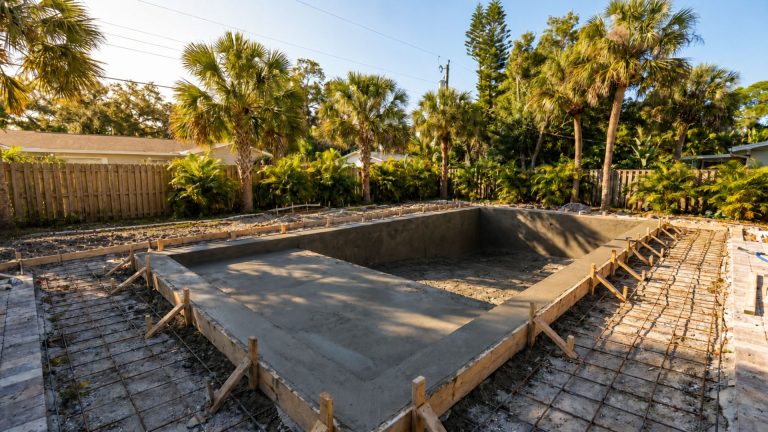
The biggest mistake we see is choosing a contractor based on price alone without verifying their experience with concrete construction specifically in this county. Concrete pools require a different skill set than fiberglass installation. The forming, the gunite or shotcrete application, the finish work, and the curing process all need to be executed correctly, and shortcuts in any of those stages show up years later in ways that are expensive to fix.
Another common mistake is underestimating the permitting timeline. Pinellas County has its own requirements, and some municipalities within the county have additional review steps. Homeowners who start the process in June expecting to swim by August are usually disappointed. A realistic timeline from permit application to first swim is typically four to six months, sometimes longer depending on the complexity of the design and current permit office volume. Our step-by-step guide to the pool construction process walks through what each phase actually involves.
Skipping the design phase to save money is also a mistake that tends to cost more in the end. A thorough pool design process catches conflicts early, before excavation begins, when changes are still inexpensive to make.
The Right Way to Approach a Concrete Pool Build Here
A well-executed concrete pool project in Pinellas County starts with a site assessment, not a sales pitch. The contractor should evaluate your yard’s drainage, soil conditions, proximity to utilities, and any setback requirements before a design is finalized. From there, the design should be built around your specific lot and lifestyle, not adapted from a catalog of standard shapes.
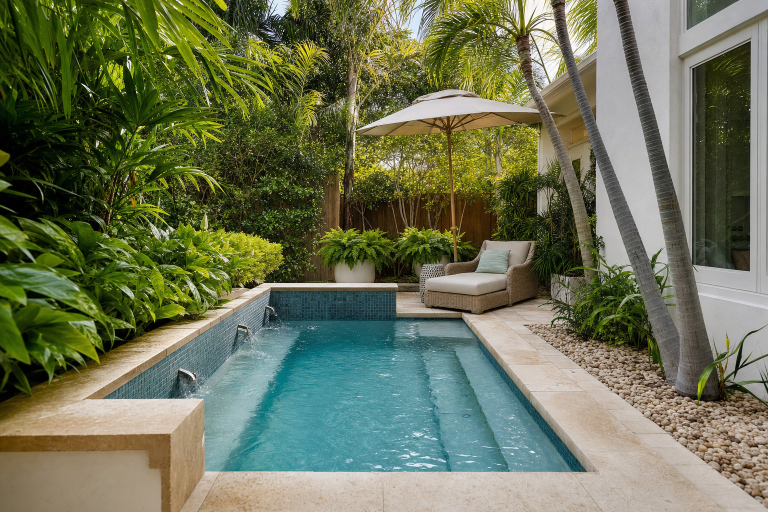
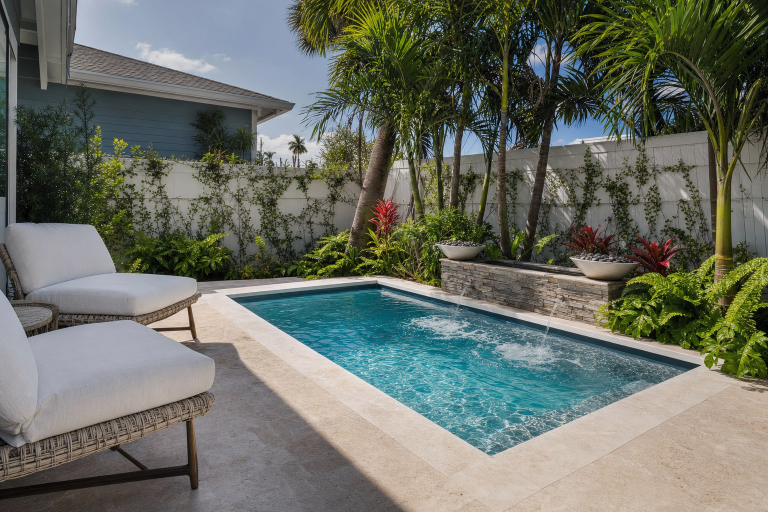
For homeowners with smaller yards or those who want the benefits of a concrete build without the footprint of a full-size pool, a plunge pool is worth serious consideration. Concrete construction works especially well for plunge pools because the compact size and custom depth options are only achievable through on-site forming. If you are also considering a spa, integrating it into the original concrete build is almost always more cost-effective than adding it later, as we have covered in our post on spa and hot tub design for existing pools.
For older pools that are structurally sound but showing their age, pool renovation is often a better path than a full rebuild. If you are not sure which category your pool falls into, our post on signs it may be time for a renovation can help you think it through.
When to Call a Professional About Concrete Pools in Pinellas County
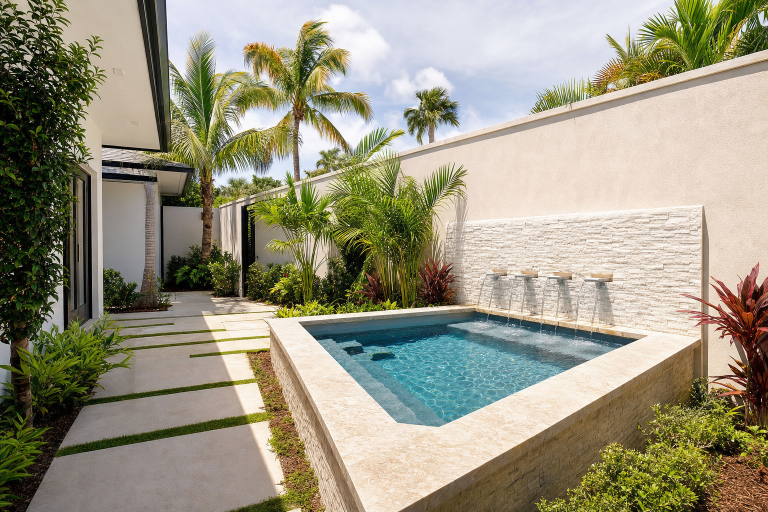
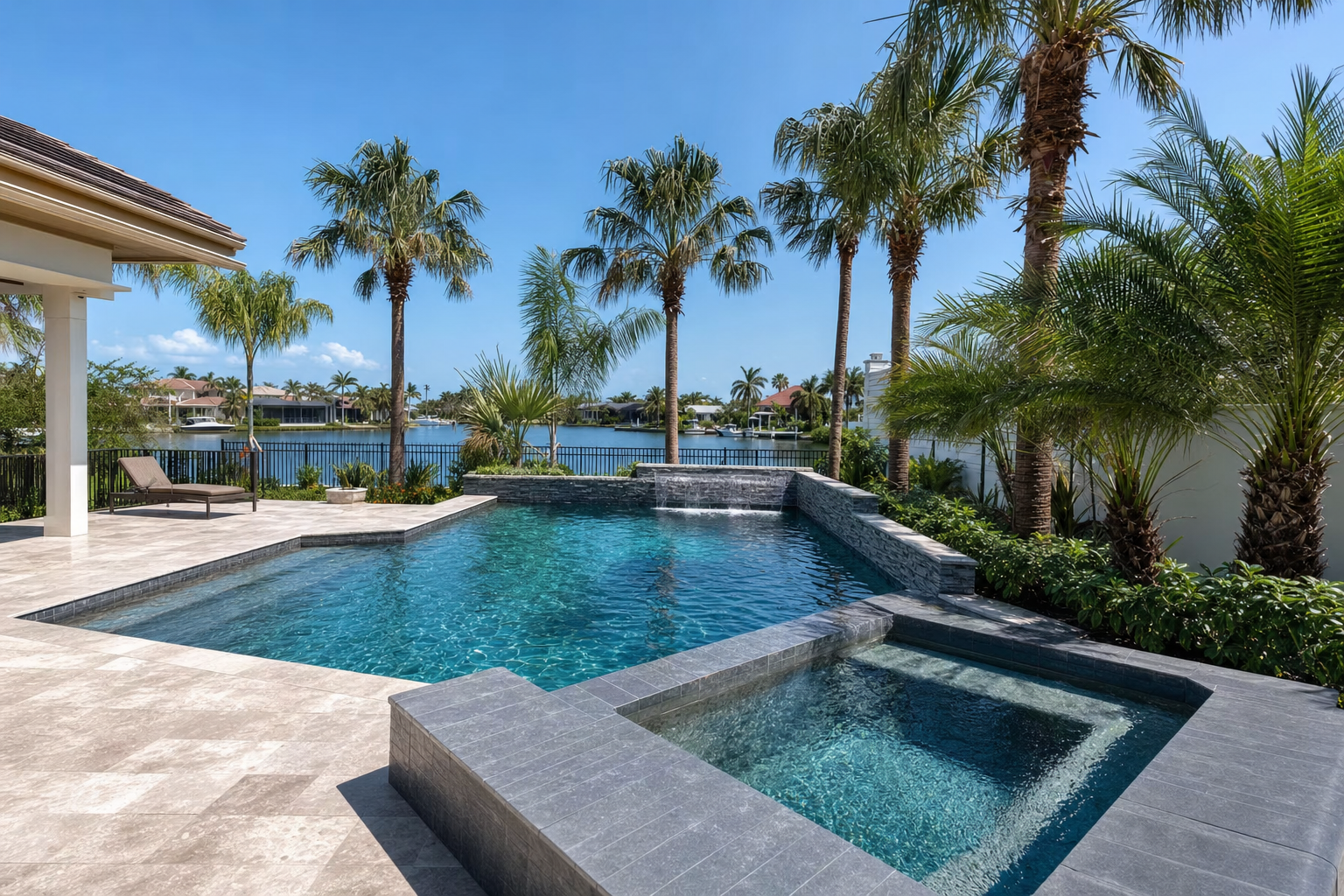
If your pool design requires anything beyond a standard rectangular shape, if your yard has grade changes or drainage concerns, or if you want integrated features like a raised spa, tanning ledge, or water feature, those are the clearest signals that concrete is the right material and that the project needs an experienced hand. Concrete pools Pinellas County homeowners can trust over the long term are built by contractors who understand the local soil, the county’s permitting process, and the finish requirements that hold up against Florida’s climate year after year.
If you are in the early stages of figuring out what your project actually requires, reach out to our team. A site visit and honest conversation about your yard and goals will tell you more than any amount of online research.