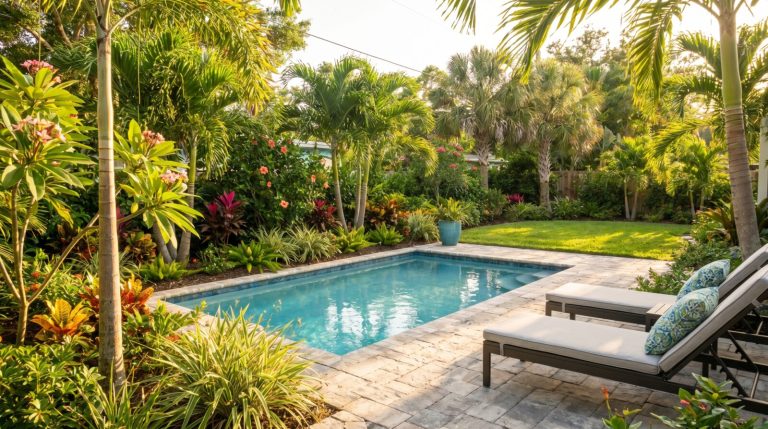
Fiberglass Plunge Pool Clearwater: What Pinellas County Soil and Lot Size Actually Demand
Homeowners in St. Petersburg, FL and those across the bay in Clearwater are often shopping for the same thing but dealing with completely different ground beneath their feet. St. Pete yards, especially in older neighborhoods like Kenwood and Historic Old Northeast, tend to sit on compacted fill with unpredictable drainage that becomes a real factor during permit review and excavation planning. Clearwater properties, particularly those closer to the bluffs above Clearwater Harbor or the tighter residential grids near Coachman Ridge, bring their own set of challenges: shallower buildable depth in some areas, sandy loam that shifts with heavy rain, and lot configurations that rule out a standard-size pool entirely. That is exactly why a fiberglass plunge pool Clearwater homeowners are researching right now is not a one-size answer. The material matters, but so does knowing the specific site before a single permit gets pulled.
Why Fiberglass Performs Differently in Pinellas County Than It Does Anywhere Else
Fiberglass pools get marketed as low-maintenance and fast to install, and both things are generally true. But the reason fiberglass works especially well in this part of Florida has less to do with the product itself and more to do with what our soil does to other materials. Pinellas County sits on a peninsula with a high water table across much of its interior. Concrete pools, which require a long cure period and are vulnerable to hydrostatic pressure from below, can develop cracks and pop-up issues in areas where the water table is close to the surface. Fiberglass shells, because they are manufactured off-site and installed as a single unit, flex rather than fracture under that kind of ground pressure.
We have worked on properties near Crest Lake Park in Clearwater where the soil reads fine on paper but holds water at a depth that surprises homeowners every rainy season. A fiberglass shell in that environment outperforms concrete over a ten-year horizon, and the ongoing maintenance costs reflect that. You are not resurfacing fiberglass every seven to ten years the way you would a plaster or pebble finish. That savings compounds quickly in a climate where pool water chemistry is active twelve months a year. If you want a deeper look at how material choice affects long-term costs in this region, our post on inground pool installation costs in the Tampa Bay area breaks that down in practical terms.
The Fiberglass Plunge Pool Clearwater Homeowners Are Actually Choosing, and Why Lot Size Drives It
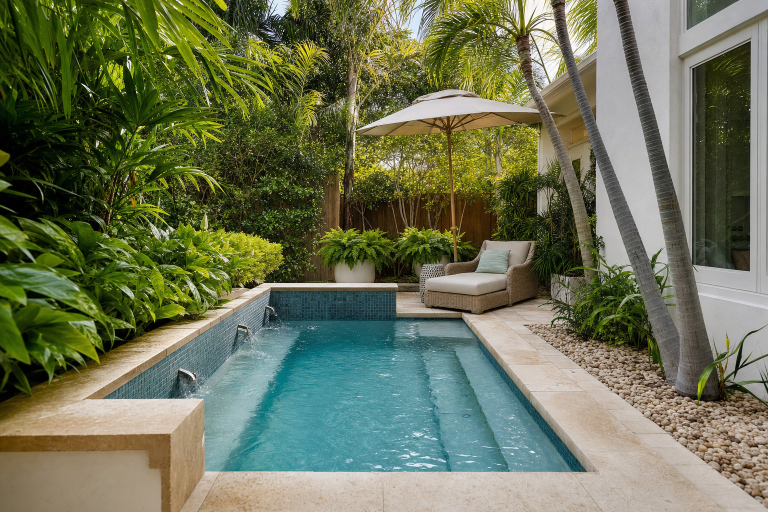
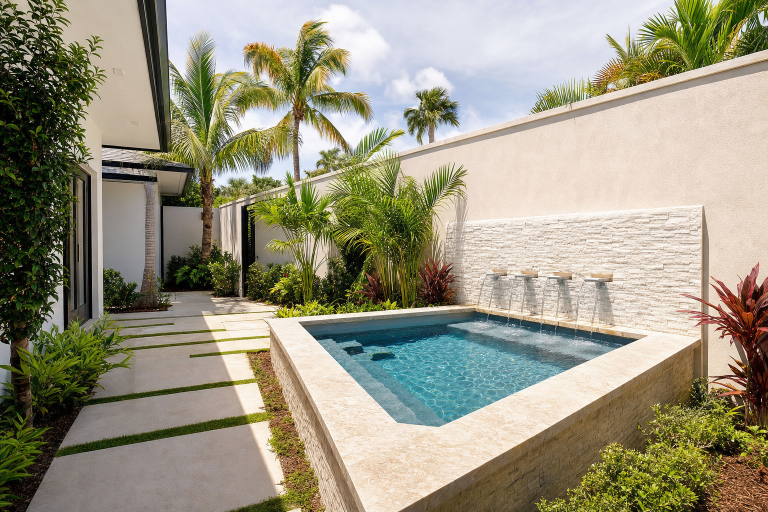
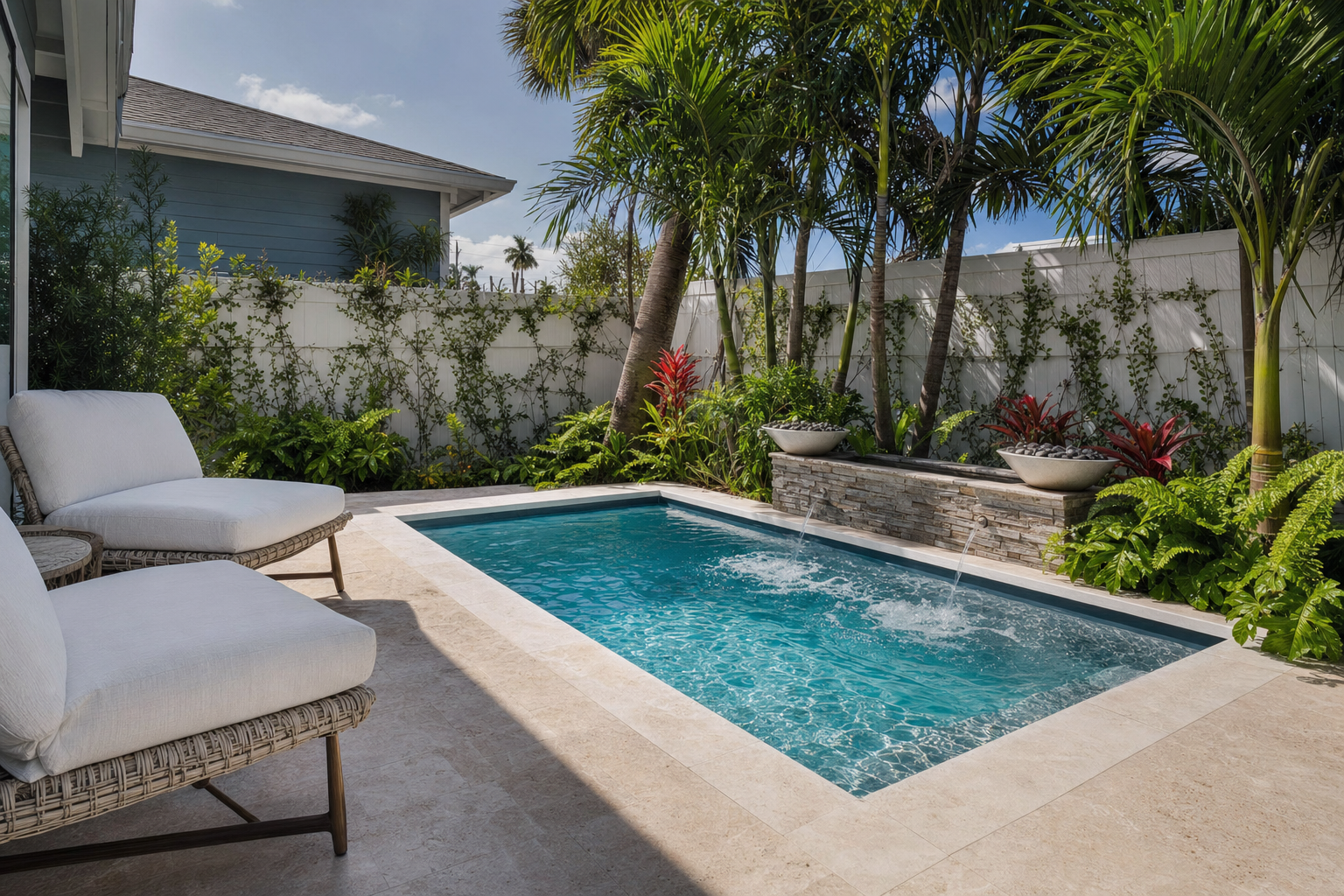
A plunge pool is not a compromise. It is a deliberate choice, and in Clearwater it is often the only choice that makes sense given the footprint of the lot. Neighborhoods like Del Oro Groves and the residential streets running off Gulf-to-Bay Boulevard were built in an era when backyard square footage was not a priority. Setback requirements from Pinellas County add another constraint. By the time you account for required distances from the property line, the home’s foundation, and any existing structures like a lanai or detached garage, the buildable zone shrinks fast.
Fiberglass plunge pools fit that reality better than any other construction type. The shells we install typically range from eight to fourteen feet in length, and because the excavation is precise and the installation timeline is compressed compared to concrete, there is less disruption to the surrounding yard and landscaping. For homeowners who have spent years building out a Florida-friendly landscape around their home, that matters. Our pool design process starts with a site evaluation that accounts for all of this before we ever talk about aesthetics.
Soil Conditions Near the Clearwater Bluffs and What They Mean for Installation
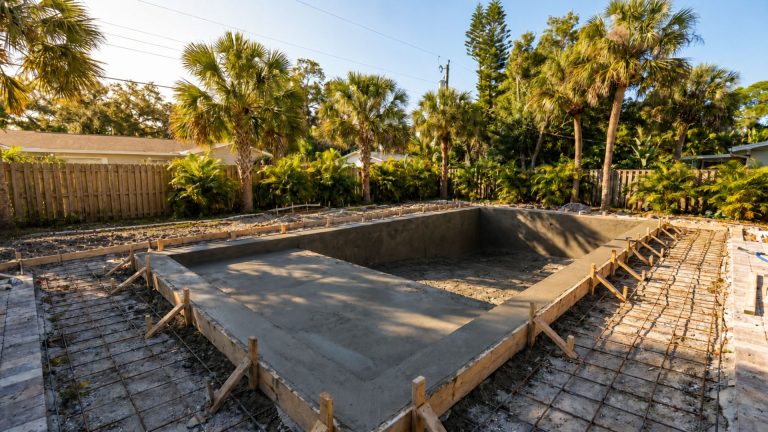
The elevation change between downtown Clearwater and the waterfront areas creates soil variability that catches a lot of homeowners off guard. Higher ground near Sunset Point Road tends to have denser, more stable soil. Properties closer to the bay, or those in low-lying pockets near Stevenson Creek, can have a mix of sandy fill and organic material that requires more preparation before a shell goes in. Our installation team assesses compaction and drainage at every site, and in some cases we recommend a gravel backfill around the shell specifically to manage water movement in those softer zones.
This is not a step every pool company in the area takes seriously. We have seen fiberglass pools installed without proper backfill management that develop lateral movement over time, especially after a heavy storm season. June through September in Pinellas County can drop eight to twelve inches of rain in a single month. The ground around a pool shell that was not properly stabilized will shift, and that shift shows up as deck cracking, coping separation, and equipment line stress. Getting the installation right the first time is the only way to avoid those problems down the road. Our step-by-step guide to the pool construction process explains how we approach each phase, including the groundwork that most homeowners never see but always benefit from.
Adding a Spa or Hydrotherapy Feature to a Plunge Pool in a Compact Clearwater Yard
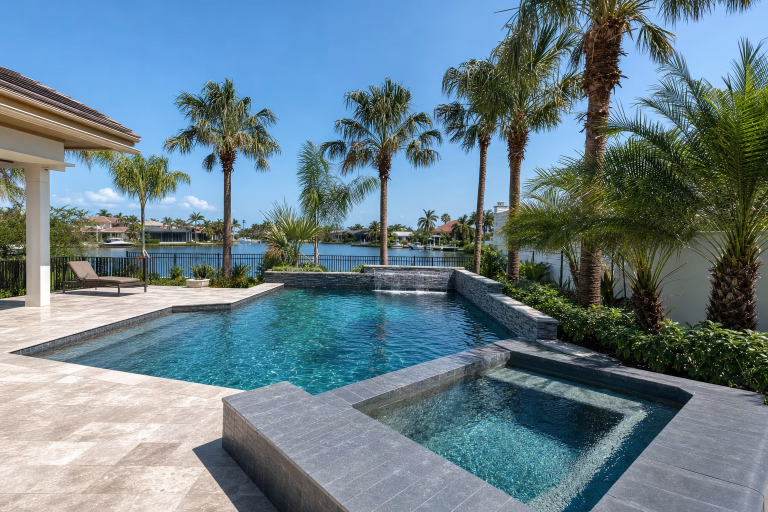
One of the most common questions we get from Clearwater homeowners is whether a small yard can accommodate both a plunge pool and a spa element. The answer is usually yes, but the configuration depends on the site. Some fiberglass plunge pool shells are manufactured with an integrated therapy seat or jetted zone built into the shell itself, which eliminates the need for a separate structure. For homeowners who want a true spa or hot tub addition, we can design a connected unit that shares equipment with the plunge pool, reducing both the footprint and the mechanical costs. Our blog post on spa and hot tub design for existing pools covers how that integration works in practice.
If you are already working with a smaller lot and considering a renovation of an existing pool structure, the fiberglass plunge pool Clearwater option is worth comparing directly against what a full pool renovation of your current setup would cost. In many cases, replacing an aging concrete shell with a new fiberglass plunge pool is more cost-effective over a fifteen-year window than resurfacing and repairing what is already there.
Clearwater’s mix of older lots, active weather, and high water table makes it one of the more demanding environments we work in across Pinellas County. A fiberglass plunge pool Clearwater installation done right handles all of that, and it does it without asking you to give up the backyard you have already built. Talk to our team about what your specific site can support.
There is something particular about Clearwater properties that we have noticed over the years: the homeowners here tend to use their outdoor spaces more intentionally than almost anywhere else we work. A plunge pool in this city does not sit unused. It becomes part of the daily rhythm of the house, and that is worth building correctly from the start.