Spa and Hot Tub Design for Your Existing Pool
You already have a pool. Now you’re considering adding a spa or hot tub. Maybe you want a place to soak on cooler evenings, or perhaps you’d like a separate relaxation area while others swim. Adding a spa to your existing pool means rethinking how your backyard works. Done right, it creates more functionality and expands how you use your outdoor space throughout the year.
The key is understanding that simply placing a spa next to your pool isn’t the same as designing one. Strategic placement, thoughtful integration, and proper planning all influence how well the two features actually work together in your space. A spa can be the missing piece that transforms your pool area from a seasonal swimming destination into a year-round outdoor living environment.
Adding a Spa Versus Actually Designing One
Many homeowners treat a spa as an add-on, something installed without considering how it fits into the existing landscape. A better approach integrates the spa into your overall backyard layout from the start.
Good design considers sightlines from inside your home, how people move through the yard, how the deck transitions work, and how the spa looks from various angles. It accounts for practical concerns like equipment placement, access for maintenance, and how plantings interact with the new feature. The result feels intentional and cohesive, not like something was squeezed into available space. Working with a team experienced in expert pool design ensures every aspect of your spa integration serves both function and aesthetics.
When a spa is designed as part of the pool experience, the two water features complement each other rather than compete for attention. Each serves a purpose. The pool invites activity and movement. The spa encourages relaxation and connection. Together, they offer flexibility that single-purpose backyards simply cannot match.
Your Integration Options
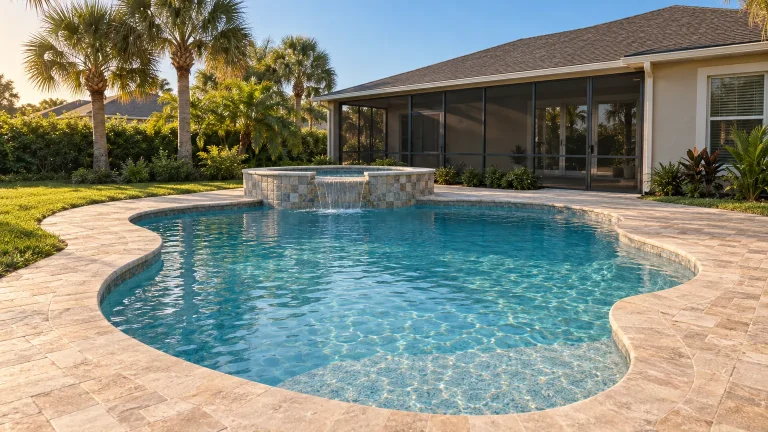
- Attached Spa – Shares circulation and equipment with your pool. Connects physically and can operate as one body of water or remain separate. Maximizes space efficiency and creates visual flow between features.
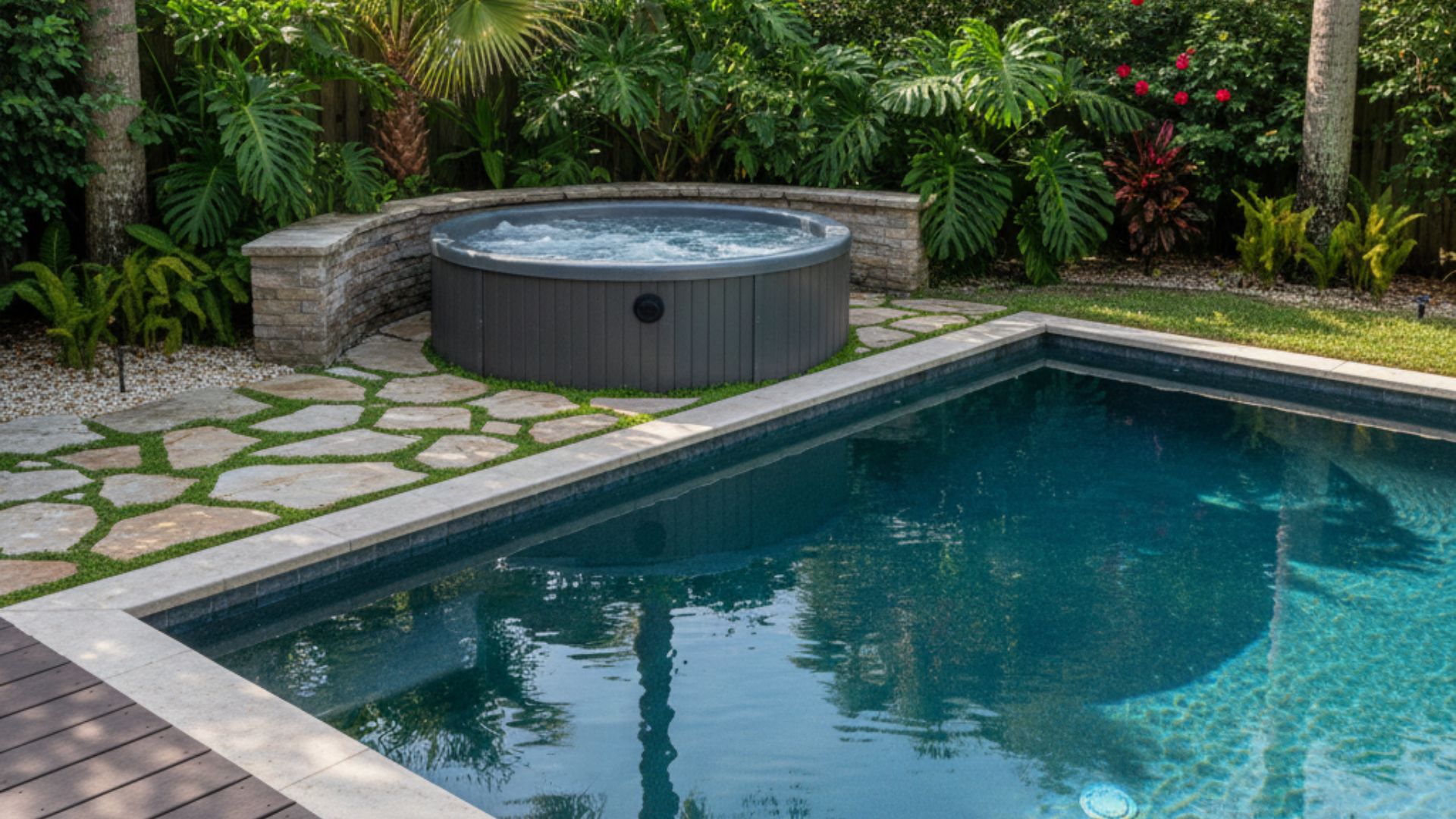
- Freestanding Hot Tub – Sits independently beside your pool with its own heating and filtration system. Works well for smaller yards or properties where you can’t modify the existing pool structure. Offers more flexibility in placement.
- Combination Setup – Pair a smaller attached spa for active use with a separate soaking tub for relaxation. Appeals to households with different preferences about water temperature and activity type.
Each option has distinct advantages depending on your space, lifestyle, and how you envision using the features. Exploring spa and hot tub addition options helps you understand which configuration best matches your property and daily life. Your existing pool structure, available deck space, and long-term goals all influence which approach makes the most sense.
Positioning Around Your Current Pool
Key considerations for spa placement include:
- Pool Shape – Rectangular pools naturally accommodate an attached spa at one end. Curved or free-form pools work better with adjacent placement that follows existing edges.
- Traffic Flow – Think about how people naturally move through your yard. Where do people gather? The spa shouldn’t block views or interrupt movement patterns.
- Deck and Landscape Integration – The surrounding hardscape and plantings influence how the spa fits into the overall design. Every element should feel connected. Thoughtful landscaping with the best plants for pool areas adds natural beauty while requiring minimal maintenance.
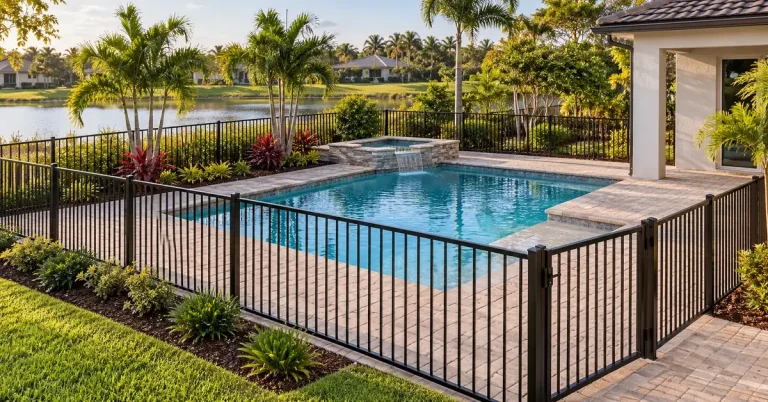
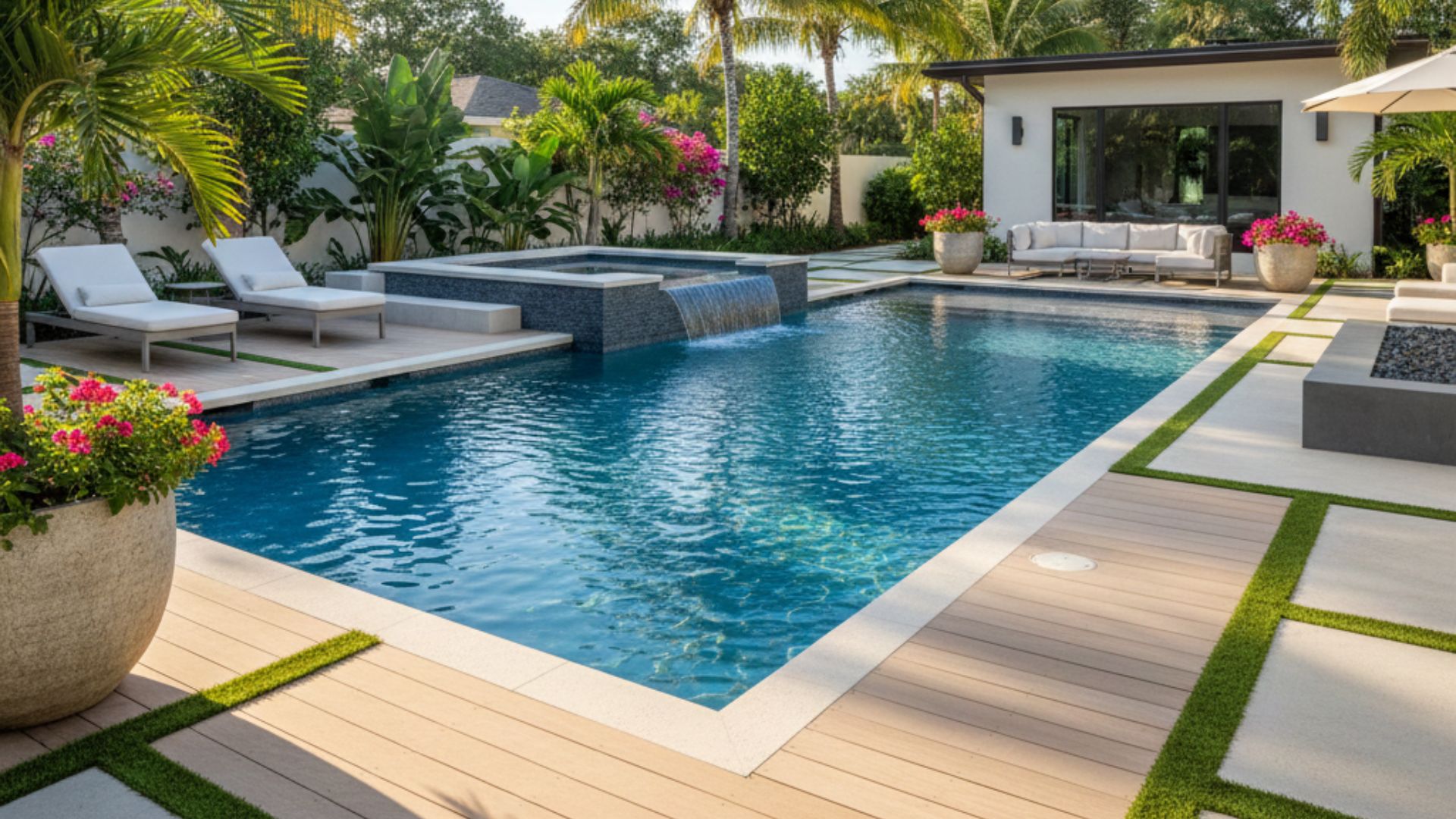
- Elevation – A raised spa creates visual interest and allows for water features like spillover effects. A recessed spa feels more integrated into the deck and landscape.
The goal is creating a layout that feels like it belongs in your specific yard, not one that could be transplanted to any backyard. Your property’s unique characteristics become design assets rather than constraints.
Seeing Your Design Before Building
Three-dimensional rendering technology lets you view exactly how a spa addition will look from every point in your yard. You see proportions, check sightlines from your kitchen windows, and visualize how the new feature interacts with existing plants and hardscape. You can explore different material options, decking choices, and layout configurations all on screen before construction begins. Reviewing completed pool and spa projects in our gallery shows how professional design transforms real backyards.
This visualization process also helps you confirm that the design actually matches how you live. Do you picture early morning soaks? Evening relaxation? Using the spa while hosting friends? The design should support your actual daily life, not an imaginary version of backyard use. Many people discover through renderings that their initial instincts need adjustment or that alternative layouts offer better functionality.
Seeing the design rendered in three dimensions eliminates guesswork. You’re not imagining what something might look like. You’re seeing it with accuracy, which builds confidence in your decision.
Year-Round Use in Tampa Bay
In the Tampa Bay area, a spa serves purposes beyond cold winter months. Year-round access means cooling off with a dip in the pool, then warming up in the spa. It means having options on any given day based on how you feel. The variety itself becomes valuable.
Florida’s mild winters make winter soaking genuinely enjoyable, but the real advantage is flexibility. Summer mornings might call for quiet relaxation in warm water before your day starts. Summer evenings after exercise benefit from warm hydrotherapy. The ability to choose between different water temperatures and experiences keeps your outdoor space relevant in every season.
A spa also functions differently during entertaining. Guests gather around warm water, creating conversation areas while swimmers use the main pool. Multiple people can enjoy your backyard simultaneously in different ways. This flexibility makes your outdoor space more functional for various activities and occasions.
Adding Features Around Your Spa
Modern spa design extends beyond just hot water and jets. Consider adding:
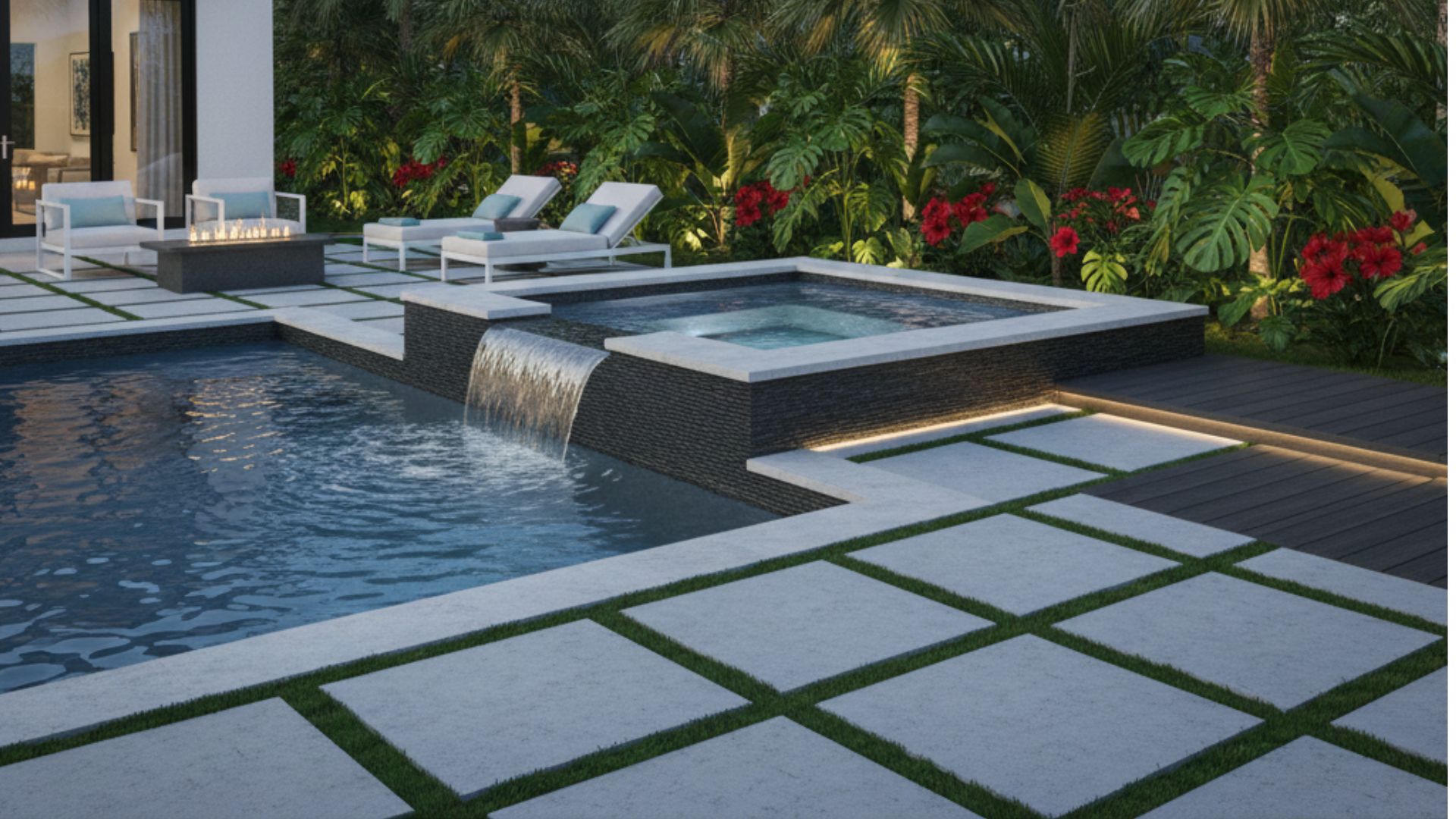
- Water Features – Fountains or spillover effects add visual and auditory interest to your space.
- Strategic Lighting – Transforms the spa into an evening focal point and improves safety around the deck area.
- Nearby Seating – Shade structures, outdoor furniture, or lounge areas create a complete zone rather than an isolated feature.
- Thoughtful Landscaping – Plants frame the spa and provide seasonal interest without introducing maintenance headaches from excessive leaf debris.
These additions work together to make your spa feel like a designed experience rather than an appliance-like addition to your yard. Exploring custom design ideas for your spa and pool helps you envision how all these elements work together. The details matter. A beautifully integrated spa becomes part of your daily outdoor life rather than a novelty that gets ignored.
How Your Household Actually Uses the Space
Before moving forward with a spa addition, spend time observing your current pool usage. How often do people actually swim? When do they use the yard? What activities happen poolside? Who spends time outside?
This observation reveals whether a spa addition truly serves your household or represents what you think should happen in backyards. Honest assessment about your actual outdoor living patterns prevents expensive additions that don’t match your real lifestyle. Some households discover that a pool renovation or addition transforms usage patterns in unexpected ways.
Talk with household members about what would make the outdoor space more appealing. Some people crave hydrotherapy. Others want social spaces beyond the pool. Some seek quiet morning refuges. These preferences guide smart design decisions.
Choosing Your Design Partner
The spa addition that performs well and brings genuine satisfaction typically results from real collaboration. Look for a team that:
- Listens Carefully – Asks questions about your lifestyle and actual needs before jumping to design solutions.
- Uses Modern Design Tools – Provides 3D rendering so you can approve plans confidently before construction begins.
- Understands Your Property – Takes time to assess your specific site’s challenges and opportunities.
- Communicates Transparently – Makes the design process clear and maintains open communication throughout the project.
- Shows Real Work – Displays completed projects and welcomes questions about past customer experiences. Learning about our design approach and team helps you understand how we work with homeowners.
Starting Your Spa Project
Adding a spa to your existing pool expands how your outdoor space functions. It represents an opportunity to think about what you actually want from your backyard, not what typically goes in backyards.
The process starts simple. What would make your outdoor space work better for you? How do you spend time outside now? What’s missing from your current setup? These questions guide meaningful conversations with design professionals.
From The Ground Up Pools works with homeowners across the Tampa Bay area to design spa and hot tub additions that integrate thoughtfully with existing pools. They serve St. Petersburg, Tampa, Clearwater, Treasure Island, and Clearwater Beach. Their process emphasizes clear communication and uses 3D design to help you visualize your project before construction begins.
Contact From The Ground Up Pools at 727-685-3812 or visit ftgupools.com to discuss your spa design. You can also view their completed projects and read customer feedback on Google to see how they approach real homeowner projects in your area.
Frequently Asked Questions
What’s the difference between an attached spa and a freestanding hot tub?
An attached spa connects directly to your pool and shares the same circulation and equipment, which helps save space and creates a unified look. A freestanding hot tub operates on its own with separate heating and filtration, giving you more flexibility for placement. The right choice depends on your yard size and how you plan to use the spa.
How do I choose the best location for a spa on my existing pool?
Look at your pool’s shape, how people move through your yard, and how the spa will connect with your deck and landscaping. Rectangular pools often work well with an attached spa at one end, while curved pools usually benefit from a nearby or offset placement. A professional pool designer can evaluate your property and recommend the best location.
Can I add a spa to any existing pool?
Most pools can accommodate a spa addition, but the options depend on the pool’s structure and layout. Attached spas require changes to the existing pool, while freestanding hot tubs can often be placed on current decking. A site evaluation is needed to confirm what will work for your space.
What features enhance a spa addition beyond the jets and heating?
Water features like spillovers or fountains, well planned lighting, nearby seating, and integrated landscaping can significantly improve the experience. These details turn a spa into a complete outdoor feature rather than a single standalone element.
How do I know if my household will actually use a spa addition?
Pay attention to how your outdoor space is used now. Consider when people are outside, how often the pool is used, and what activities matter most. Talk with everyone in the household about whether relaxation, social time, or therapeutic use is the priority. Being honest about lifestyle needs helps ensure the spa addition gets regular use.